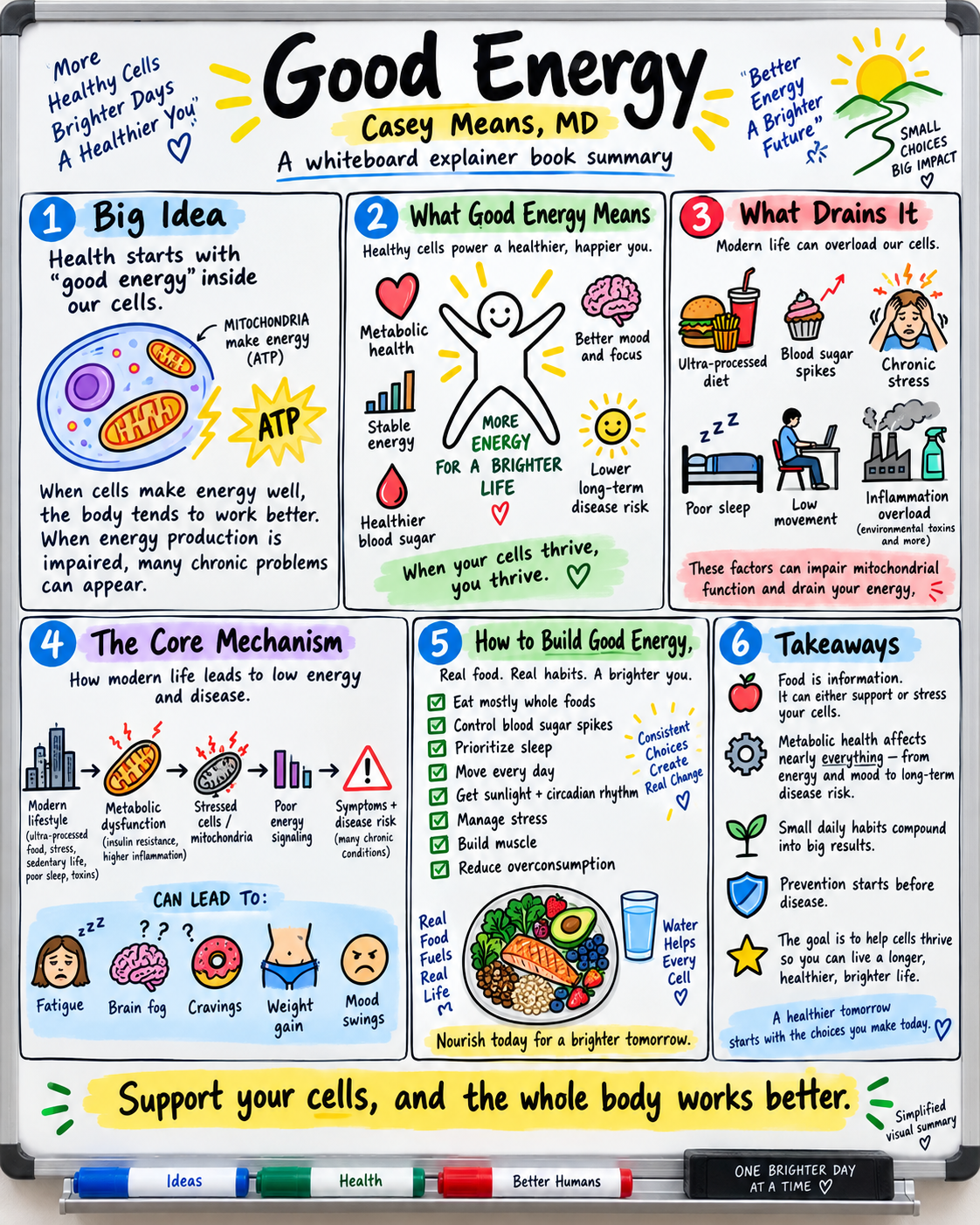
Good Energy: The Surprising Connection Between Metabolism and Limitless Health, by Casey Means, MD, with Calley Means (2024).
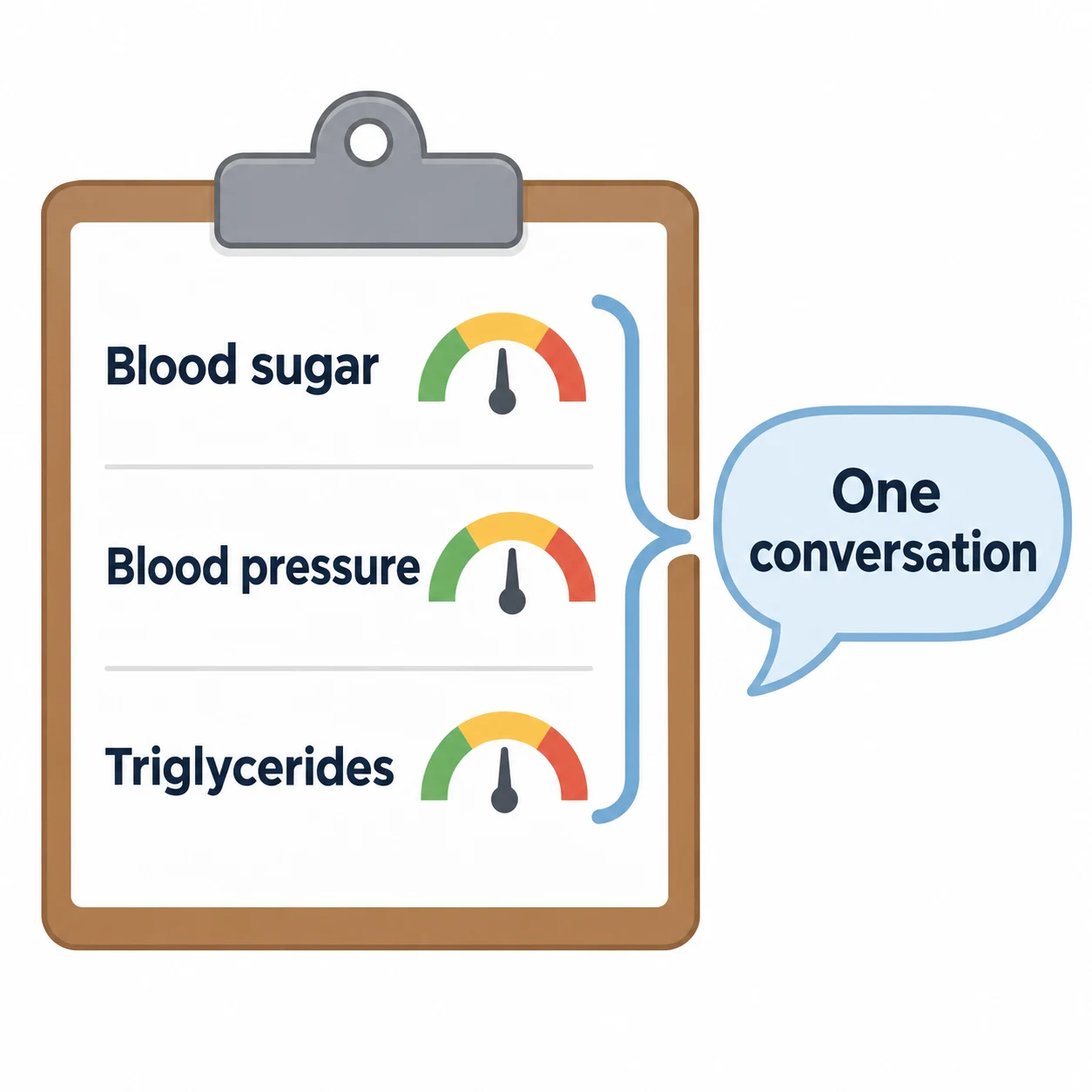
A checkup can leave you with a collection of numbers: blood pressure, blood sugar, cholesterol. It is easy to study each result without asking how they fit together.
Good Energy invites that bigger conversation. Its central idea is that the way our bodies turn food into usable energy connects everyday habits with long-term health. Food, movement, sleep and stress belong in the same picture.
That is a useful starting point. The harder question is how far the picture stretches. Does metabolic health explain nearly every illness? Does more glucose data necessarily mean better health? The book is most useful when those questions stay open.
The idea behind Good Energy
On her book page, Casey Means presents metabolic function as a unifying way to understand symptoms and disease. The book combines that argument with food advice, daily habits, blood tests and wearable tools. Its appeal is practical: look for patterns instead of treating every health concern as an unrelated event.
Metabolism is the collection of chemical processes that keep us alive. Mitochondria help many of our cells produce usable energy. But a biological explanation is not automatically proof that a particular routine prevents a particular disease.
There is established medical ground beneath part of the book's argument. Metabolic syndrome is a cluster of risk factors that raises the risk of heart disease, stroke and type 2 diabetes. Clinicians already consider these factors together.
The leap from that cluster to one root cause of nearly every chronic illness is much bigger. A shared pathway can matter without being the only cause or the right treatment target for everyone. The practical question to bring to a clinician is how your own results fit together, not whether every symptom has one hidden explanation.
Evidence: A (strong) for the recognized risks associated with metabolic syndrome. D (speculative) for a single explanation covering nearly all chronic disease. These grades describe the claims, not the book as a whole.
What the 93% statistic actually measures
One striking figure associated with the book is that roughly 93% of American adults are metabolically unhealthy. Understanding the definition matters more than remembering the headline.
A 2022 study, using U.S. survey data, found that only 6.8% of adults met its definition of optimal cardiometabolic health in 2017–2018. Researchers assessed five areas: body size, glucose, blood lipids, blood pressure and cardiovascular disease history.
The complement, 93.2%, means people did not meet every part of that strict definition. It does not mean 93.2% had the same disease, damaged mitochondria, or an illness that the book's program could fix. It is also a finding from that survey period, not a current count.
A composite measure can reveal a population-level problem while telling you little about one person's diagnosis. A person missing one target and a person with several serious conditions can both fall outside the optimal category. Their needs may be very different.
Evidence: B (moderate) for this population estimate from observational survey data. Treating the complement as a disease diagnosis is an unsupported interpretation.
A glucose monitor gives data. What does it change?
The book encourages readers to learn from continuous glucose monitors, or CGMs. These sensors estimate glucose in the fluid between cells. They can show how readings vary through the day, but the trace needs context.
Evidence outside diabetes is developing, and people with prediabetes should not be lumped together with people whose glucose levels are normal.
A 2026 review included 23 studies with 1,074 participants without diabetes. It reported possible improvements in average glucose and adherence to behavior changes, with glycemic benefits concentrated in people with prediabetes. It found no appreciable glycemic benefit in healthy people with normal glucose levels and no statistically significant pooled BMI benefit.
Those results concern measurements and short-term behavior. They do not establish that buying a sensor prevents heart attacks or extends life. A normal rise after food is not, by itself, a diagnosis or a reason to fear that food.
The FDA's first over-the-counter CGM clearance also tells users to discuss medical decisions based on its output with a healthcare provider. Permission to sell a device and proof of broad health benefits are different questions.
Evidence: B (moderate) for emerging glucose-related benefits in prediabetes within the reviewed interventions; C (weak) for health optimization in people with normal glucose. Long-term disease prevention from routine CGM use in that group remains unproven.
Food: make a satisfying meal easier to reach
The book's emphasis on less heavily processed food has a firmer experimental foundation than its sweeping root-cause thesis.
In a 2019 NIH feeding trial, 20 adults lived at a research center and ate an ultra-processed diet for two weeks and an unprocessed diet for two weeks, in random order. They could eat as much as they wanted. The offered diets were designed to be matched on several nutritional measures; actual intake was not held equal.
Participants ate about 500 more calories per day on the ultra-processed diet. This was a small, tightly controlled, short-term trial. It supports a role for the food environment in how much people eat, without proving that every packaged food has the same effect.
A useful everyday interpretation is to make satisfying meals convenient. Add beans to a soup, frozen vegetables to dinner, or fruit to breakfast if those fit your needs and preferences. Affordable, practical food counts. Eating well does not require turning every purchase into a purity test.
Evidence: B (moderate) for the short-term intake difference in this randomized trial. The examples are practical options, not a tested treatment plan.
Movement and sleep deserve room in the day
The book asks readers to look beyond a workout and consider the rest of the day. Brief movement breaks are one practical place to start.
A 2022 review of experimental studies found that interrupting prolonged sitting with light walking improved postmeal glucose and insulin responses compared with continued sitting. These were acute measurements. They are not evidence that one five-minute walk prevents diabetes.
If walking is comfortable and accessible, a short stroll after a meal can be a simple experiment. Choose movement that fits your abilities and circumstances; a rigid step target is not necessary to begin.
Sleep is another part of the book's daily-habits approach. CDC guidance recommends at least seven hours for adults aged 18–60, seven to nine hours at 61–64, and seven to eight hours at 65 and older. Sleep quality matters too. Persistent sleep problems or unexplained fatigue deserve attention, not an assumption that a lifestyle checklist will solve them.
Evidence: B (moderate) for the short-term walking findings; A (strong) for established adult sleep guidance. Neither promises a specific result for an individual.
Read the commercial context, too
The authors' book page identifies Casey as a co-founder of Levels and Calley as a co-founder of Truemed. Their business backgrounds are relevant when the book discusses monitoring tools and wellness spending. Those connections do not automatically invalidate an argument, but they are a reason to ask for evidence independent of a product's marketing.
You can take the useful habits seriously without buying every tool or accepting every explanation. A book can help you ask better questions without becoming your diagnostic manual.
Start with one ordinary choice
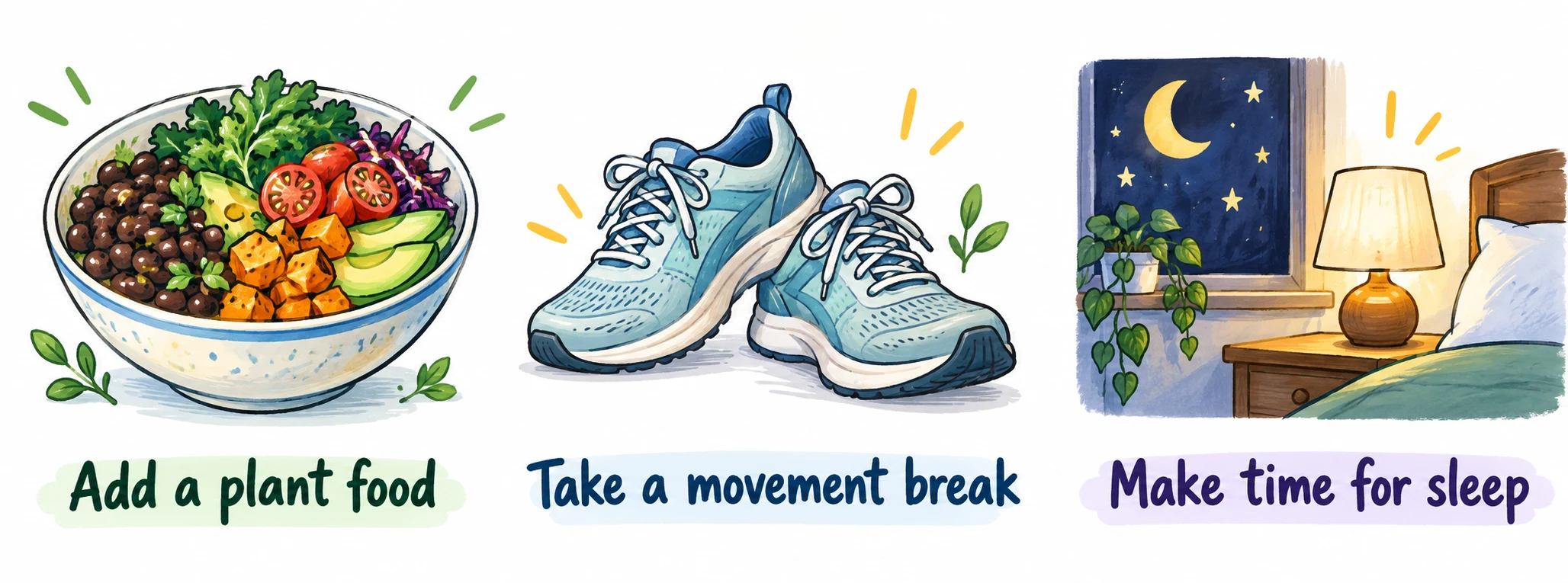
Choose something small enough to repeat: make one meal easier to prepare, take a comfortable movement break, or protect a little more time for sleep. These are options to adapt, not requirements to complete all at once.
The most useful takeaway from Good Energy is to consider daily habits and health together. Keep that wider view, bring your questions to a clinician, and be more demanding of claims that promise one explanation for everything.
This summary is educational and is not medical advice. Discuss symptoms, test results and treatment decisions with a qualified healthcare professional.
 MealCoach