Master plan · 12 min read · updated 2026-10-14

The MealCoach Master Plan

Right now, the easiest food to reach is the food that's worst for you. We think that's the real problem, and we're building a company to flip it.

Make healthy food the easy, cheap and delicious default — at home, at work, on the street and on every screen — until obesity and diet-related disease like type 2 diabetes become rare.

MealCoach starts small, with an app that helps you notice how fast you eat while the meal is still happening. The endgame is much bigger. We want to change what's around you when you get hungry.

That means growing into a family of companies that floods the world with food that's cheap, tasty and genuinely good for you, until the healthy choice is simply the easy one.

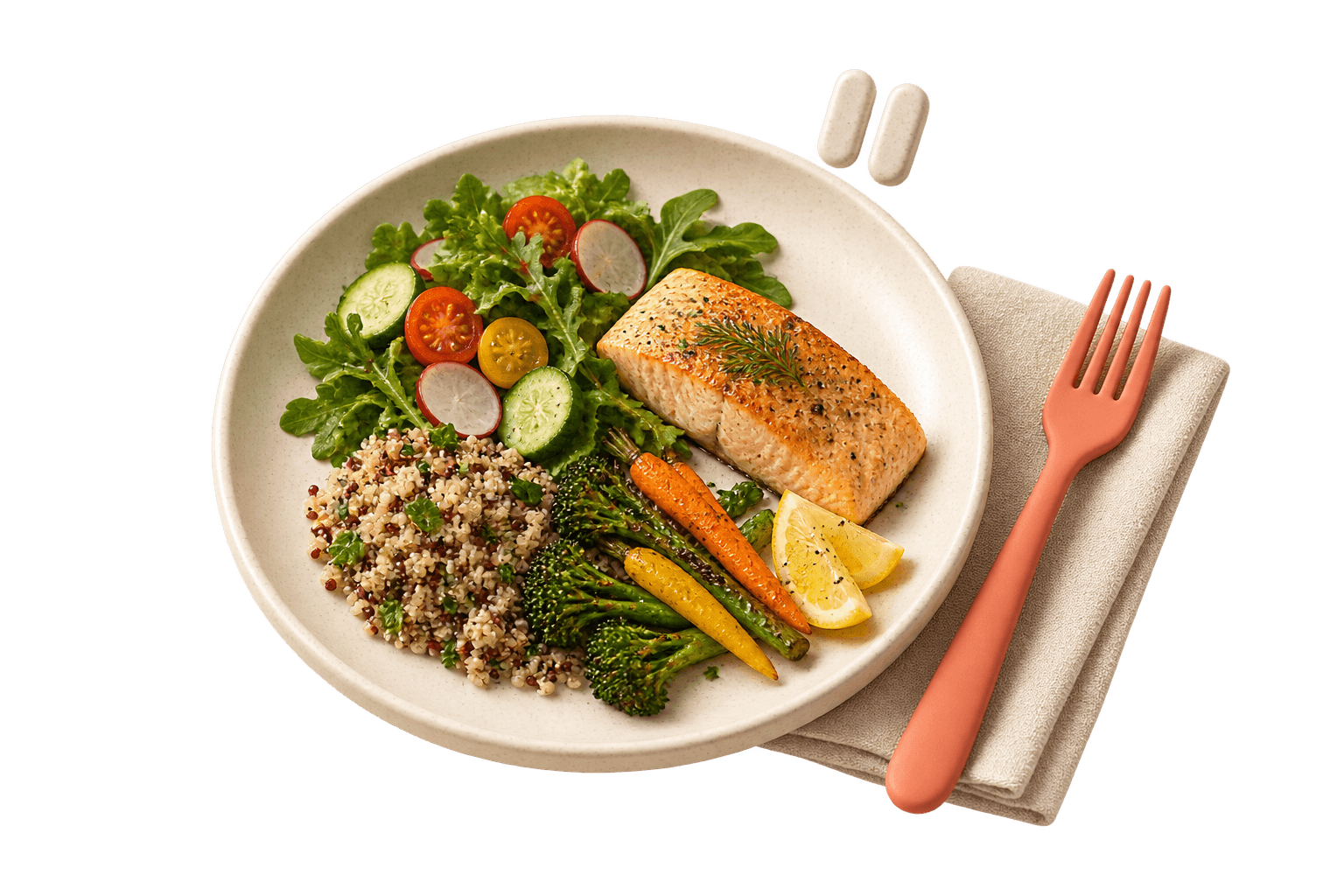
A colourful, healthy plate: salmon, quinoa, roasted vegetables and salad, with a coral fork

The 60-second version

  • The problem isn't willpower. It's an environment that makes overeating cheap, fast and everywhere.
  • We'll remove the barriers one by one: price, access, time, taste, habits, information, support and the rules.
  • We start with MealCam, then add effortless tracking, coaches, media, our own food, restaurants, stores and policy.
  • Every business funds and feeds the next. That's the flywheel.
  • North star: a world where obesity and type 2 diabetes become rare, as they already are in places like Japan.

“Obesity is a normal response to an abnormal environment.”

— Professor Boyd Swinburn's finding, as summarised by Deakin University

Our opponent isn't sugar, or fat, or fast food. It's the default: whatever is cheapest, closest and quickest when you're hungry. Today the default is engineered to make you overeat. We're going to change it.

A story

Meet Sam. It’s Tuesday.

Sam wants to eat well. Watch what the day does to that plan.

  1. 7:40 am

    No time. Grabs a pastry and a sweet coffee at the station. 600 calories, gone in four minutes.

  2. 1:10 pm

    Twenty-minute lunch break. The salad place has a queue; the burger counter doesn't. Eats at the desk while answering email.

  3. 6:30 pm

    Tired. The supermarket's end-of-aisle deal is family-size crisps. Dinner is takeout, eaten on the sofa, plate empty before the episode intro ends.

  4. 10:15 pm

    Third trip to the kitchen. Not hungry. Just… there.

Sam is a composite, built from the kinds of days people describe to us and online. Not a real customer.

None of those choices were “bad decisions”. Every one was the default. That’s the problem.
The problem is the environment, not willpower

Here's the uncomfortable truth: most of us aren't overeating because we're weak. We're overeating because we're normal people living in an environment built to make it easy.

Researchers call it an obesogenic environment: surroundings that make overeating easy and healthy choices hard. Cheap, calorie-dense, heavily processed food is everywhere, marketed constantly and designed to be hard to stop eating. Healthy options are often pricier, slower and harder to find.

And it works. In a tightly controlled NIH study, people offered ultra-processed meals ate about 500 more calories a day than when offered unprocessed meals, even though the meals were matched for sugar, fat, fiber and salt. Nobody told them to. The food did.

Asking individuals to resist that environment one meal at a time is a losing game. Changing the environment works for everyone at once.

And here's the good news: environments can be changed. One country already shows what that looks like.

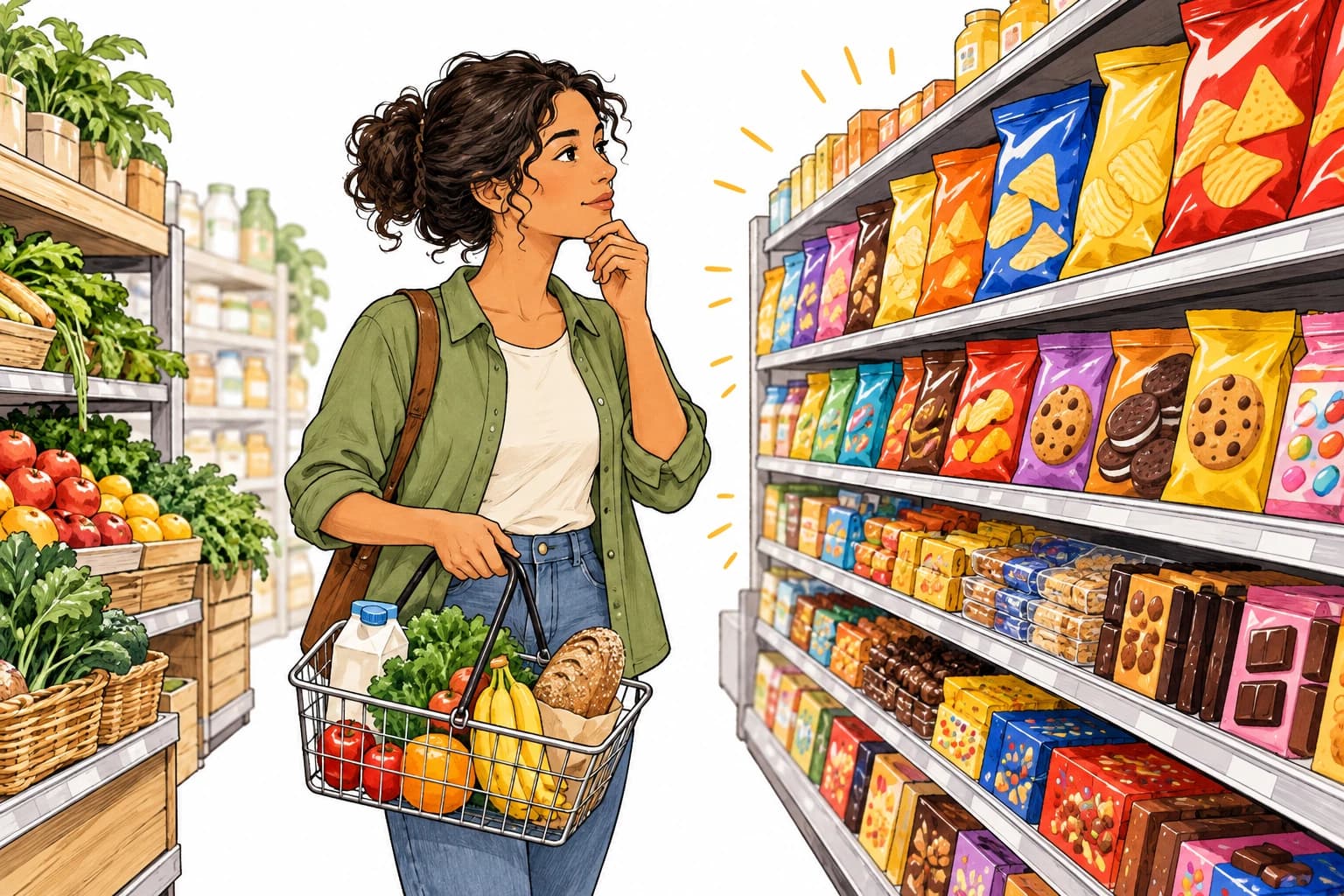
Illustration: a shopper with a basket of fruit and vegetables looks at a towering wall of brightly packaged snacks
The fresh food is there. The snacks are bigger, brighter and at eye level.

“If something melts down quickly, your brain thinks that there's no calories in it…you can just keep eating it forever.”

— Food scientist Steven Witherly, quoted in Michael Moss's Salt Sugar Fat

In people’s own words

  • “I inhale my food.” r/DAE
  • “on complete autopilot” r/loseit
  • “easy to forget and a difficult habit to create” r/LifeProTips

“It fails because no amount of willpower can be sustained forever.”

— Michael Moss, on dieting, in Hooked: Food, Free Will, and How the Food Giants Exploit Our Addictions

The numbers behind the problem

This isn’t a niche issue. It’s the biggest food story of our lifetime.

1 in 7

people worldwide were living with obesity in 2024 (1.1 billion).

WHO obesity fact sheet

589M

adults aged 20–79 live with diabetes, about 1 in 9. Most cases are type 2.

IDF Diabetes Atlas, 11th edition (2025)

57.9%

of calories in the US diet came from ultra-processed foods.

Martínez Steele et al., BMJ Open 2016

+508

extra calories a day people ate on an ultra-processed diet, compared with an unprocessed one matched for nutrients (20 adults, 4 weeks).

Hall et al., Cell Metabolism 2019 (NIH)

2.8B

people couldn't afford a healthy diet in 2022, about 35% of the world.

FAO, SOFI 2024

$4.32T

a year: the projected global economic impact of overweight and obesity by 2035.

World Obesity Federation, 2023

Proof it can be different

What Japan got right

In Japan, lunch at school is a lesson. Most public schools serve a cooked school lunch, and in many the children serve it to each other: aprons on, ladles out, the whole class eating the same balanced meal together.

In 2005 Japan passed a law, the Basic Act on Shokuiku, that makes food and nutrition education part of growing up, and schools have dedicated nutrition teachers who plan the menus.

Add an old Okinawan saying, hara hachi bu (eat until you're about 80% full), and you get a culture where the healthy choice is the normal one. Nobody needs heroic willpower. The environment does the heavy lifting.

That's the model. Not a diet. A food environment.

A typical Japanese school lunch: rice, miso soup, fish, vegetables and milk.
Adult obesity rate, selected OECD countries
CountryAdults with obesity
Japan3.7%
South Korea5.3%
United States38.2%

Share of adults with obesity, OECD Obesity Update 2017. Japan had the lowest rate in the OECD; the United States the highest. Source: OECD Obesity Update 2017, via FoodNavigator-Asia.

Every barrier we’ll remove

The friction points, access issues and barriers to entry that make healthy eating hard today, and how MealCoach will solve each one. 23 barriers, 8 themes.

Today’s streetFRIED 24/7MEGA SODA2 for 1SNACKSSUPERSIZEFOR $1Cheapest, closest, quickest = overeatingTomorrow’s streetSOS-FREE BOWLScheaper than takeoutZERO-OIL SNACKSCheapest, closest, quickest = healthy
Same street, same hunger, same budget. Different default.

Money

  • Barrier

    Healthy food costs more

    Per calorie, junk food is often the cheapest way to fill up. Fresh produce and ready-made healthy meals cost more.

    How MealCoach solves it

    Make healthy the cheaper option: zero-oil snacks and SOS-free meals priced below takeout, with automation pushing costs down every year.

    NextZero-oil snack brands · SOS-free meal delivery · Grocery stores

  • Barrier

    Experts are expensive

    A dietitian or coach is out of reach for most people, or has a long waiting list.

    How MealCoach solves it

    An AI nutrition assistant for everyday questions, and a marketplace that makes human experts easier to find and more affordable.

    NextAI nutrition assistant · Coach & nutritionist marketplace

  • Barrier

    Healthy food goes to waste

    Fresh food spoils before it gets eaten, so buying it feels like losing money.

    How MealCoach solves it

    Right-sized portions, frozen and shelf-stable healthy options, and delivery in the amounts people actually use.

    NextSOS-free meal delivery · Online grocery delivery

Access

  • Barrier

    Food deserts

    No grocery store with fresh, affordable food within easy reach; plenty of fast food and convenience stores.

    How MealCoach solves it

    Online grocery delivery and our own stores, prioritising neighbourhoods with the fewest healthy options.

    LaterOnline grocery delivery · Grocery stores

  • Barrier

    The nearest food is junk food

    Vending machines, petrol stations and fast-food counters are closer than any healthy option.

    How MealCoach solves it

    Put healthy snacks and meals where people already are: delivery, snack brands in everyday shops, and restaurants on busy streets.

    NextZero-oil snack brands · Restaurant chains · SOS-free meal delivery

  • Barrier

    Eating out means oil, salt and sugar

    Restaurant and takeout food usually has more added salt, oil and sugar than home cooking, and you can't see it.

    How MealCoach solves it

    Restaurant chains and delivery where SOS-free is the default and every dish is clearly labelled.

    LaterRestaurant chains · SOS-free meal delivery

Time & skill

  • Barrier

    No time to cook

    Long workdays and short breaks make the quickest option win, and the quickest option is rarely healthy.

    How MealCoach solves it

    Ready-to-eat healthy meals, fast delivery, and companion robots that help with planning and prep.

    NextSOS-free meal delivery · Companion robots

  • Barrier

    Not knowing how to cook healthy food that tastes good

    Healthy cooking feels bland or complicated; no-oil cooking is unfamiliar.

    How MealCoach solves it

    Short guides, courses and recipes (starting with our zero-oil guide), plus an assistant that answers 'what can I make with this?'

    TodayMedia & courses · AI nutrition assistant

  • Barrier

    Planning is exhausting

    Deciding what to eat every day, writing lists and shopping takes energy people don't have.

    How MealCoach solves it

    An assistant that plans meals around your tastes and budget and turns the plan into a delivery order.

    NextAI nutrition assistant · Online grocery delivery

Taste & cravings

  • Barrier

    Junk food is engineered to be irresistible

    Salt, sugar and fat are tuned so it's hard to stop eating, and healthy food can't compete.

    How MealCoach solves it

    Taste-first food development: nothing launches unless it wins blind taste tests against the usual choice.

    NextZero-oil snack brands · SOS-free meal delivery · Restaurant chains

  • Barrier

    Healthy food has a boring reputation

    'Diet food' brings to mind small, bland, joyless meals.

    How MealCoach solves it

    Brands, restaurants and media that make healthy food look and taste like a treat people want to share.

    NextZero-oil snack brands · Media & courses · Restaurant chains

Habits & awareness

  • Barrier

    Eating fast and on autopilot

    The plate is empty before you notice; the meal happened in the background while scrolling.

    How MealCoach solves it

    MealCam shows your pace during the meal and offers a gentle cue; the smart fork does it with a tap.

    TodayMealCoach & MealCam · Mindful-eating hardware

  • Barrier

    Tracking is tedious

    Logging every meal and weighing food takes effort, so people stop after a few days.

    How MealCoach solves it

    Ambient hardware and AI that log meals, pace, portions and nutrients automatically, with no typing.

    BuildingMindful-eating hardware · AI nutrition assistant

  • Barrier

    Portions keep growing

    Big plates, big packs and 'value' sizes make overeating the default.

    How MealCoach solves it

    Sensible default portions in our food and restaurants, and pads that show how much you actually ate.

    NextRestaurant chains · Zero-oil snack brands · Mindful-eating hardware

  • Barrier

    Late-night and boredom snacking

    Trips to the kitchen that aren't about hunger, often in the evening.

    How MealCoach solves it

    Gentle awareness of kitchen trips, and healthy snacks that are the easiest thing to grab.

    NextMindful-eating hardware · Zero-oil snack brands

Information

  • Barrier

    Confusing and conflicting advice

    Every week a new diet trend; it's hard to know what to trust.

    How MealCoach solves it

    Plain, evidence-based content that says what's known and what isn't, and an assistant that cites its sources.

    TodayMedia & courses · AI nutrition assistant

  • Barrier

    Labels are hard to read

    Hidden oil, salt and sugar, and serving sizes nobody actually eats.

    How MealCoach solves it

    Clear, honest labels on everything we sell, and support for clearer labelling rules.

    NextZero-oil snack brands · Policy & research

  • Barrier

    Marketing drowns out health

    Junk food advertising is everywhere, including to children.

    How MealCoach solves it

    Our own media, games and brands that make healthy food the exciting story, and policy work on children's food marketing.

    LaterMedia & courses · Games & learning · Policy & research

Support & mindset

  • Barrier

    Willpower fatigue

    Resisting temptation meal after meal is exhausting, and eventually people give in.

    How MealCoach solves it

    Change the environment so the healthy choice doesn't need willpower: it's the default, the cheapest and the closest.

    LaterSOS-free meal delivery · Grocery stores · Restaurant chains

  • Barrier

    Shame and stigma

    Feeling judged about weight or eating habits makes people avoid help.

    How MealCoach solves it

    A no-shame tone everywhere we show up: private, supportive feedback and no rankings or scolding.

    TodayMealCoach & MealCam · Media & courses

  • Barrier

    Doing it alone

    Family, friends and colleagues eat differently; social meals pull people back.

    How MealCoach solves it

    Coaches, companion robots and restaurants where everyone at the table can find something they love.

    NextCoach & nutritionist marketplace · Companion robots · Restaurant chains

The rules

  • Barrier

    School and workplace food

    Canteens and vending machines often default to cheap, processed food.

    How MealCoach solves it

    Partner with schools and employers on healthy-by-default menus, and back policy that improves school meals.

    LaterPolicy & research · SOS-free meal delivery

  • Barrier

    Incentives favour junk

    The economics of the food system reward cheap, calorie-dense, long-shelf-life products.

    How MealCoach solves it

    Prove that healthy food can be a great business, and share evidence with policymakers to shift incentives.

    LaterPolicy & research

One flywheel

Every business feeds the next. Helping people notice how they eat builds trust and understanding. That understanding shapes better tools, coaching and media. Those point to food we make and sell, and that food changes what is on the shelf and in the street. A healthier street makes the next healthy choice easier still.

Healthyby defaultNoticeapp & MealCamTrackhardware & AIGuidecoaches, robots, mediaFeedsnacks, meals, storesShapepolicy & research

The plan, step by step

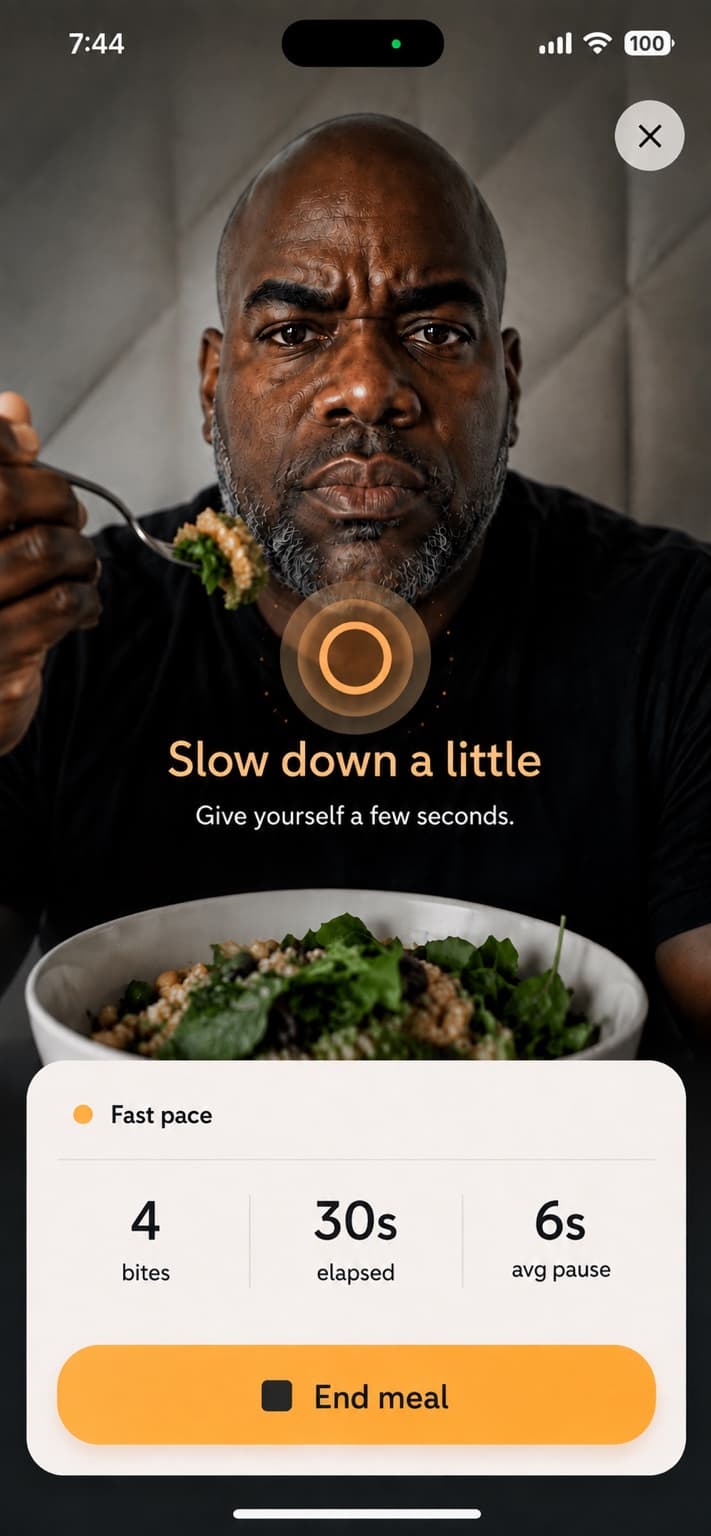
Eight steps, each one funding and feeding the next. Step one already exists: MealCam watches your pace during a real meal and offers a gentle nudge when you’re rushing.

MealCam screen during a meal: 'Slow down a little', 4 bites, 30 seconds elapsed, 6 second average pause
MealCam today: a gentle cue, mid-meal.
  1. 1

    TodayMealCoach & MealCam · Media & courses

    Help people notice how they eat

    MealCam shows your eating pace during a real meal and offers a gentle cue when you're rushing. Free tools, games, guides and articles make healthy eating curious and fun instead of a chore.

  2. 2

    BuildingMindful-eating hardware · AI nutrition assistant

    Make tracking effortless

    Hardware that quietly tracks meals with no logging: a fork that counts bites, plate and bowl pads that weigh what you eat, a coaster for drinks. Together with an AI nutrition assistant, they give a personal picture of when, how fast and what you eat.

  3. 3

    NextCompanion robots

    Bring in friendly helpers

    Cute personal robots that keep you company at the table, prompt a pause, and help plan and prep simple healthy meals at home.

  4. 4

    NextCoach & nutritionist marketplace

    Connect people with the humans who help

    Partner with nutritionists and coaches, and run a marketplace where anyone can find the right one, with their consent-based MealCoach data making each session more useful.

  5. 5

    NextMedia & courses · Games & learning

    Teach and inspire at scale

    The best courses, shows, documentaries, films and learning games about food and health, so the healthy story is the most entertaining one.

  6. 6

    NextZero-oil snack brands · SOS-free meal delivery

    Make the food

    Zero-oil snack brands, and meal delivery with no added salt, oil or sugar (SOS-free) that tastes great and costs less than takeout.

  7. 7

    LaterRestaurant chains · Grocery stores · Online grocery delivery

    Own the shelf and the street

    Restaurant chains, grocery stores and online grocery delivery where the default option is the healthy one, and zero-oil, zero-added-sugar and zero-added-salt choices are everywhere.

  8. 8

    LaterPolicy & research

    Change the rules

    Work with governments, schools and researchers on food policy that makes the healthy food environment permanent: what's sold, how it's labelled, what children are served.

Flood the world with healthy abundance

Abundant, cheap, tasty food with zero-oil, zero-added-sugar and zero-added-salt options everywhere people eat. Not as a niche, but as the normal choice.

Today

  • MealCoach & MealCamNotice your eating pace in real time.
  • Media & coursesArticles, guides, courses, shows, documentaries and films.
  • Games & learningGames that make food and nutrition knowledge stick.

Building

  • Mindful-eating hardwareFork, plate and bowl pads, sip coaster, kitchen sensor.
  • AI nutrition assistantA personal assistant for health, wellness and nutrition.

Next

  • Companion robotsCute personal robots that help you eat and cook well.
  • Coach & nutritionist marketplaceFind and work with the right expert.
  • Zero-oil snack brandsSnacks with no added oil that people actually crave.
  • SOS-free meal deliveryMeals with no added salt, oil or sugar.

Later

  • Restaurant chainsFast, affordable, healthy-by-default restaurants.
  • Grocery storesStores where the healthy aisle is the whole store.
  • Online grocery deliveryHealthy staples delivered cheaply and fast.
  • Policy & researchEvidence and policy for healthier food environments.

The same story, ten years on

Sam’s Tuesday, rewritten

Same job. Same budget. Same hunger. Same willpower. Different street.

Today

  1. 7:40 am

    No time. Grabs a pastry and a sweet coffee at the station. 600 calories, gone in four minutes.

  2. 1:10 pm

    Twenty-minute lunch break. The salad place has a queue; the burger counter doesn't. Eats at the desk while answering email.

  3. 6:30 pm

    Tired. The supermarket's end-of-aisle deal is family-size crisps. Dinner is takeout, eaten on the sofa, plate empty before the episode intro ends.

  4. 10:15 pm

    Third trip to the kitchen. Not hungry. Just… there.

With MealCoach

  1. 7:40 am

    The station kiosk sells a zero-oil breakfast box for less than the pastry. Same four minutes, very different fuel.

  2. 1:10 pm

    The fastest counter on the street is an SOS-free bowl place. The smart fork taps once mid-meal; Sam puts it down and actually tastes lunch.

  3. 6:30 pm

    Dinner was ordered last night by the assistant, on budget, delivered warm. The plate pad logs it. Nothing to type.

  4. 10:15 pm

    A gentle note: third kitchen trip tonight. Sam grabs water instead. No guilt, just a nudge.

Sam didn’t become a different person. The defaults did.

Why now

AI lowers the cost of expertise

Personal nutrition guidance, recipe development and coaching support that used to need a team can increasingly be done by software.

Robotics lowers the cost of food

Automated kitchens, packing and delivery make it realistic to sell fresh, healthy food at fast-food prices.

Small teams can build big things

Every one of these businesses gets easier to start each year. As the barriers fall, each ambition on this page becomes feasible, and we intend to build them.

How we’ll behave

“Eat food. Not too much. Mostly plants.”

— Michael Pollan, In Defense of Food (2008)
  • Taste first. Healthy food only wins if people love it.
  • Cheap and abundant. Healthy has to be the affordable, everywhere option, not a luxury.
  • No shame. We change environments, not people's worth. No blame, no extreme dieting, no scare tactics.
  • Evidence over hype. We say what is measured and what is estimated, and we don't promise medical outcomes.
  • Private by default. People own their data; nothing about their meals is shared without consent.

The master plan, in short

  1. Help people notice how they eat (MealCoach & MealCam).
  2. Use what we learn to make tracking effortless with hardware and an AI assistant.
  3. Add companion robots, coaches and a marketplace of experts.
  4. Teach and inspire through the best food and health media and games.
  5. Make the food: zero-oil snacks and SOS-free meal delivery.
  6. Open restaurants, grocery stores and online delivery where healthy is the default.
  7. Help change food policy so the healthy food environment lasts.

Ingredients for success

What it takes

  • UnlimitedTasteHealthy food only wins if it beats the junk alternative in a blind taste test.
  • Cheaper than the defaultPriceThe healthy option has to be the affordable one, not a premium treat.
  • Everywhere people get hungryDistributionPhones, desks, kitchens, streets, stores. Convenience decides most meals.
  • Earned every dayTrustHonest claims, private data, no shame. One broken promise costs years.
  • Deep and growingUnderstanding of how people really eatWhat MealCoach learns (with consent) about pace, cravings and routines tells us what to build next.
  • A heaped spoonfulScienceNutritionists, researchers and our own measured results keep us honest about what works.
  • As much as possibleAutomationAI and robotics push the cost of expertise, cooking and delivery down every year.
  • Small, AI-nativeTeamsFew, excellent people with great tools can now build what used to take a corporation.
  • Patient, raised step by stepCapitalEach business should prove itself before it funds the next one.
  • A story worth sharingBrandPeople should be proud to say they eat this way, and want to tell friends.
  • ManyPartnersCoaches, farmers, chefs, schools and governments. We can't change a food environment alone.
  • DecadesPatienceFood environments change slowly. We plan to still be here when it pays off.

Recipe for success

  1. 1

    Now

    Start with one meal

    Earn a place in people's daily lives with MealCam: help them notice how fast they eat, and make it feel good, not judged.

  2. 2

    Always

    Listen before you cook

    Learn what people actually eat, crave and struggle with. Let that decide what we build, not our assumptions.

  3. 3

    Every product

    Taste-test relentlessly

    Only launch food that beats the usual choice in blind tests. If it isn't delicious, it isn't ready.

  4. 4

    Each new business

    Launch small, prove the numbers

    Start online or in one city. Get repeat customers and healthy unit economics before scaling.

  5. 5

    Each step

    Reinvest into the next step

    Profits and learning from one business fund and feed the next. That's the flywheel.

  6. 6

    Every year

    Automate to get cheaper

    Use AI and robotics so the healthy option keeps getting cheaper, faster and more available.

  7. 7

    As it works

    Scale where people eat

    Delivery, then restaurants, then stores and online grocery, until healthy food is the default nearby.

  8. 8

    At scale

    Use evidence to change the rules

    Share what we learn with researchers and policymakers so healthier food environments last.

Serves: everyone. Best enjoyed slowly.

Path to success

Milestones, in order. Each one is reached when we can see the signal, not when a date passes.

  1. Milestone 1

    A product people love

    We’ll know when: People keep using MealCam and tell friends it helped them notice how they eat.

  2. Milestone 2

    Effortless tracking

    We’ll know when: Hardware prototypes pass their verification criteria and early users log meals without lifting a finger.

  3. Milestone 3

    A trusted voice

    We’ll know when: Our guides, games, courses and films are where people go to learn about healthy eating.

  4. Milestone 4

    Our first food brand

    We’ll know when: A zero-oil snack that wins taste tests, earns repeat purchases and is profitable.

  5. Milestone 5

    Healthy meals at takeout prices

    We’ll know when: SOS-free meal delivery in one city, cheaper than typical takeout, with customers who reorder.

  6. Milestone 6

    On the street and on the shelf

    We’ll know when: Our first restaurants and stores, where the healthy choice is the default and the business stands on its own.

  7. Milestone 7

    A multinational family of companies

    We’ll know when: Several businesses in several countries, each feeding the others through the flywheel.

  8. Milestone 8

    A healthier food environment

    We’ll know when: Where we operate, the healthy choice is the easy one, and public health data on obesity and type 2 diabetes moves in the right direction.

Conclusion

Obesity and type 2 diabetes aren't a willpower problem. They're what a cheap, fast, junk-by-default food environment produces in normal people.

MealCoach exists to change the default. We'll start by helping you notice how you eat, and keep going until the healthy choice is the cheapest, closest and tastiest one on every street.

Our north star: a world where obesity and type 2 diabetes become rare, because the healthy choice is the easy one, like it already is in places like Japan.

It starts with one meal. Get MealCoach

What's the one barrier that makes eating well hardest for you? Your answer shapes what we build next. Tell us here.