
“Some people think plant-based diet, whole foods diet is extreme. Half a million people a year will have their chests opened up and a vein taken from their leg and sewn onto their coronary artery. Some people would call that extreme.”
The one-sentence summary
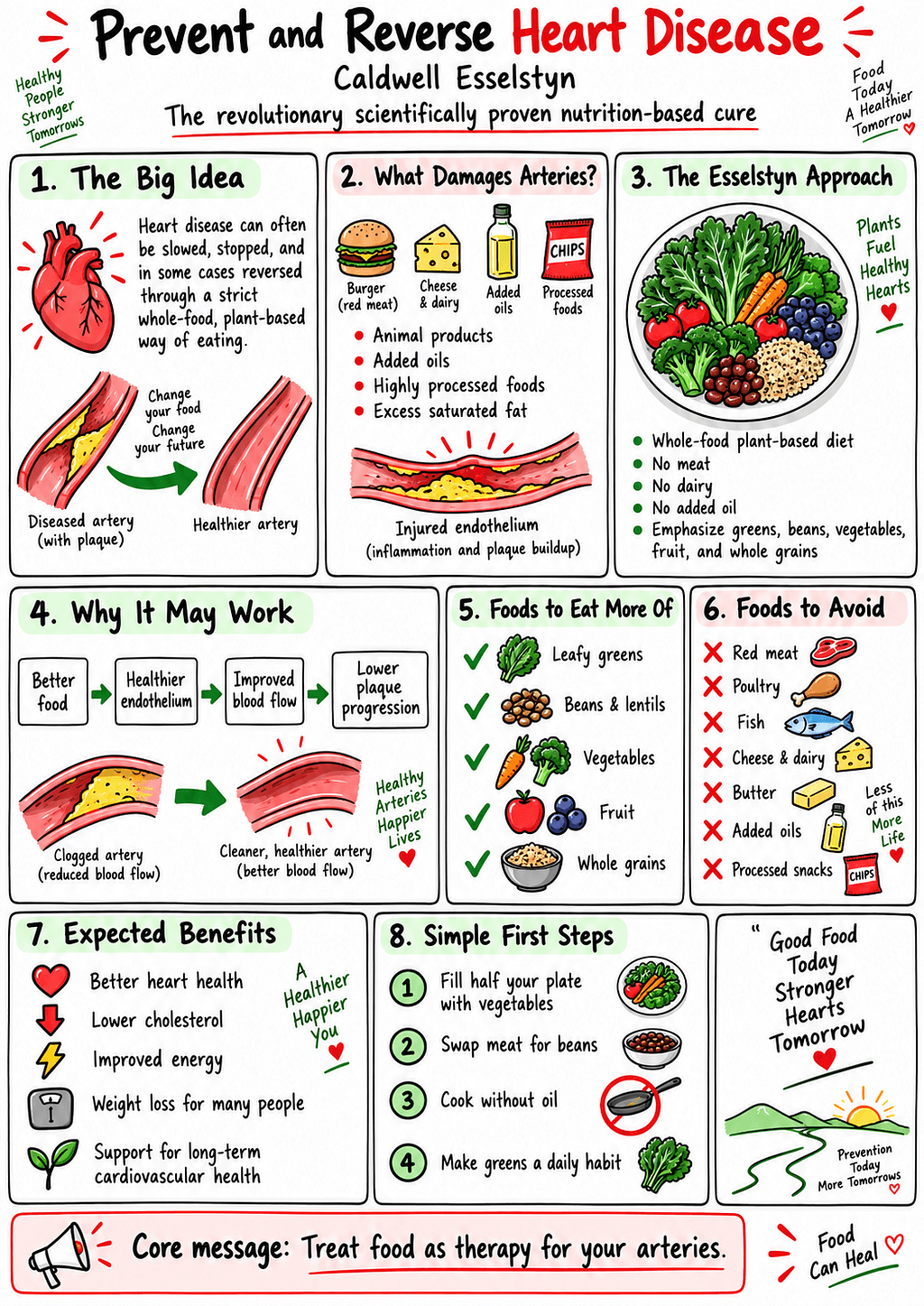
Heart disease, America’s leading killer, doesn’t have to be a surgical problem at all. Esselstyn argues it’s a food problem, and that a strict, oil-free, whole-food plant-based diet can stop it and in many cases reverse it.
Who wrote it, and why it matters
Caldwell Esselstyn was a surgeon at the Cleveland Clinic, not a diet guru. After serving as an army surgeon in Vietnam, he noticed something odd: Asian populations barely had heart disease, while Americans were clogging their arteries from a young age. His own father suffered diabetes, strokes, multiple cancers, and ultimately died of heart disease.
The more he looked at global data, the clearer the pattern became. Wherever heart disease was nearly absent, people ate very little fat and had total cholesterol under 150 mg/dL. So he asked a radical question: what if we could get heart patients to that same number with food?
The experiment
Esselstyn recruited a small group of patients with severe, advanced coronary disease. Many had already had bypass surgery, and some had been told they had about a year to live. Some had cholesterol over 300.
The rules were strict: no meat, no fish, no dairy, no oil. Patients also took a cholesterol-lowering medication. Exercise and meditation weren’t required.
One underrated detail: patients met at his home to swap recipes. That sense of community kept people on the plan.
The results:
- Average cholesterol fell from roughly 247 to 137 mg/dL
- Every patient who stayed on the program stopped their disease from progressing
- Eight showed measurable reversal of their artery blockages
- Chest pain eased, exercise capacity improved, and sexual function returned for many
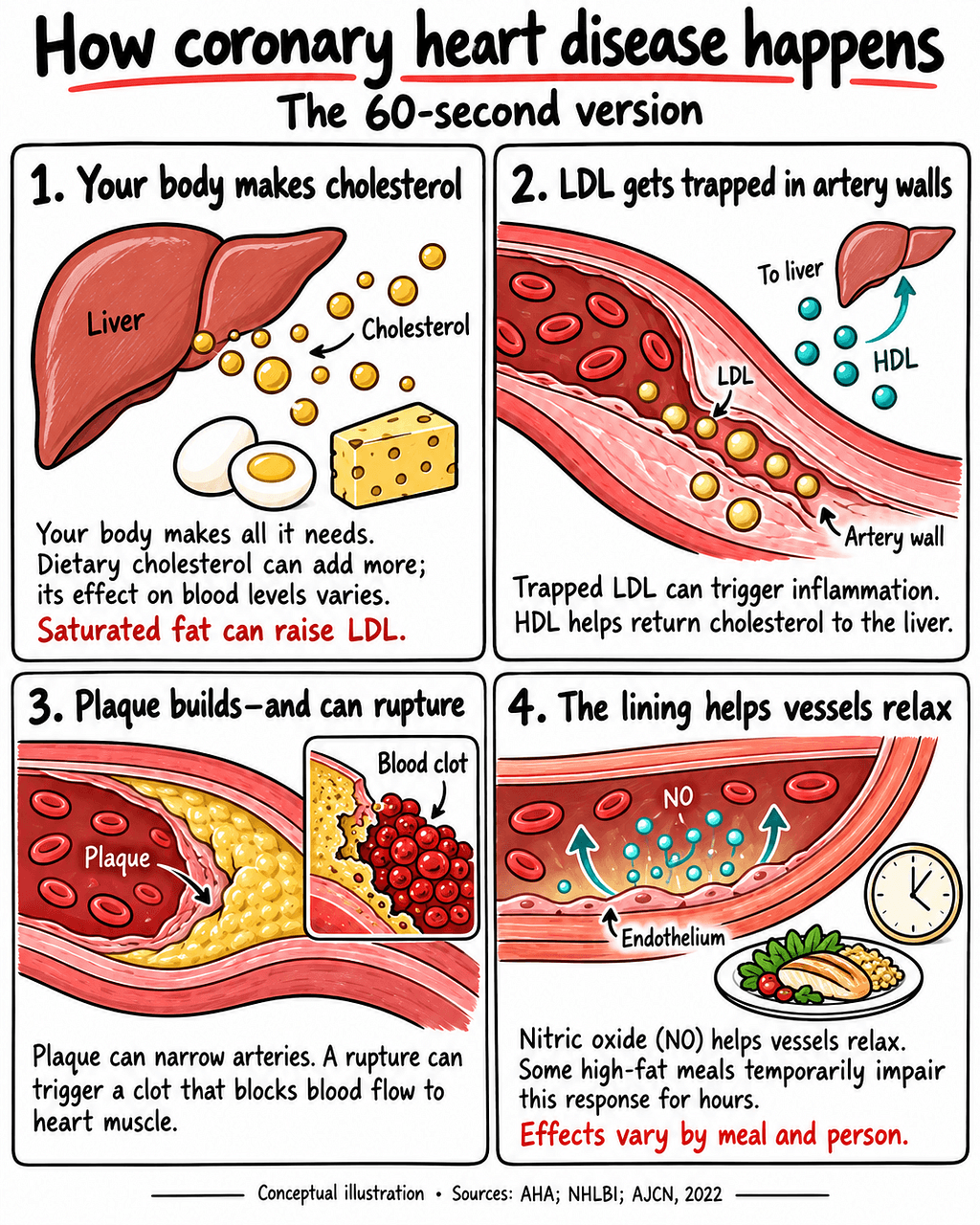
How heart disease actually happens (the 60-second version)
- Your body makes all the cholesterol it needs. Eating it from animal foods just adds more.
- LDL (“bad”) cholesterol builds up in artery walls. HDL (“good”) cholesterol carries it back to the liver.
- Fat and cholesterol form plaques that narrow arteries until blood can’t reach the heart.
- The lining of your blood vessels, the endothelium, produces nitric oxide, which keeps vessels relaxed and open. Esselstyn points to research showing that a single high-fat meal can impair this for hours.
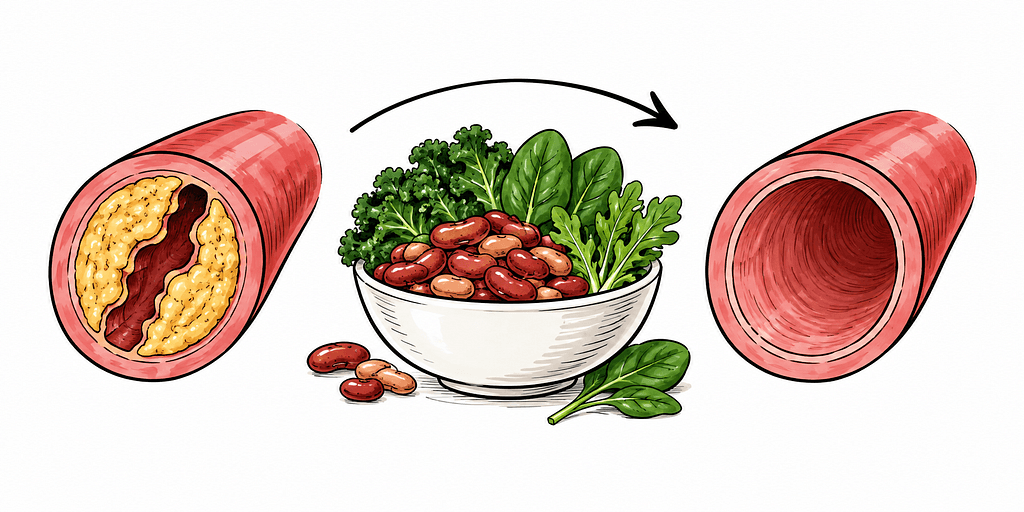
His conclusion is blunt: on a truly plant-based, oil-free diet, you stop feeding the process that builds plaque.
Top 7 lessons
1. Moderation kills. This is the book’s most famous idea. Esselstyn compares it to car crashes: whether you crash at 90, 80, or 70 mph, you still get hurt. Cutting back a little on fat isn’t enough. The goal isn’t low fat, it’s roughly 10% of calories from fat.
2. Erase “this little bit can’t hurt” from your vocabulary. If you remember one thing from the book, it’s this. The weekend cheat, the vacation exception, the “special occasion” slice of cheese are exactly what keeps people from full recovery.
3. Olive oil isn’t a health food. The Mediterranean diet beats the standard American diet, he concedes, but “better than terrible” isn’t the goal. He argues that oils, including olive oil, still damage blood vessels and don’t reverse disease.
4. The official guidelines set too low a bar. For decades, cholesterol levels of 250 to 300 were treated as normal, and dietary guidelines allowed around 30% of calories from fat. Esselstyn argues that people meeting these standards still have heart attacks, and he blames food-industry influence on the agencies writing the rules.
5. Your cravings are temporary. After about 12 weeks without animal foods, dairy, or added oil, he says, the craving for fat fades and you start tasting the natural flavors of food.
6. Prevention beats surgery. Bypasses and stents are expensive, painful, and frightening, and they treat the symptom rather than the cause. He finds it strange that a vegetarian diet gets called “drastic” while opening someone’s chest is considered conservative.
7. You’re in control. His mission is to make heart disease a “paper tiger,” a threat that collapses once people know the truth and act on it.
The rules, simplified
Avoid:
- Anything with a mother or a face (meat, poultry, fish, eggs)
- All dairy
- All oils, including olive oil
- Refined grains (white rice, white flour pasta and bread)
- Nuts and avocados (heart patients avoid them entirely; the book allows healthy people some walnuts)
- Coconut
Eat freely:
- All vegetables, especially leafy greens
- Legumes: beans, lentils, peas
- Whole grains: oats, brown rice, quinoa, barley, buckwheat, millet, farro, whole wheat
- Fruit (whole, not juice, and around three pieces a day)
Supplements the book recommends:
- Vitamin B12
- Vitamin D3 if your blood levels are low
- Ground flaxseed or chia seeds daily for omega-3s
Some patients, particularly those with inherited high cholesterol, may still need cholesterol-lowering medication.
Top action items
- Clean out your kitchen. Remove the oils, cheese, and chips so willpower isn’t your only defense.
- Read labels like a detective. Products labeled “zero fat” can shrink serving sizes to hit that number, and some fat-free dressings sneak in additives.
- Learn five go-to meals. The book’s favorites include black beans with rice and vegetables, baked sweet potatoes, oatmeal, big salads, and oil-free hummus (no tahini).
- Make a lemon-vinegar-mustard dressing. It replaces oily dressings on everything.
- Call restaurants ahead. Explain your needs; most will accommodate you.
- Handle invitations with candor. Tell hosts about your diet when you accept. Offer to eat beforehand or ask for steamed vegetables.
- Plan travel meals. Request special meals from airlines or pack your own.
- Watch the starches. If weight creeps up, cut back on grains and starchy vegetables and add more leafy greens.
Easy win from the recipe section: oil-free sweet potato fries. Bake at 400°F for 25 minutes, flip, then another 25 minutes until crisp.
Who should read this
Anyone with heart disease, a family history of it, high cholesterol, or type 2 diabetes. It’s also a strong companion read to T. Colin Campbell’s The China Study, which Esselstyn repeatedly recommends, and fits alongside the work of Dean Ornish, John McDougall, Neal Barnard, and Michael Greger, and documentaries like Forks Over Knives.
The bottom line
Esselstyn’s message is uncompromising: heart disease is largely a choice we make at every meal. The program isn’t easy, but his patients, many of whom had been sent home to die, are his proof that it works.
Its enduring question is worth carrying into the kitchen: What would change if we treated our daily meals as an important part of our long-term care?
Research references:
- Esselstyn CB Jr, et al. (2014). A way to reverse CAD? Journal of Family Practice, 63(7), 356–364b.
- Ornish D, et al. (1998). Intensive lifestyle changes for reversal of coronary heart disease. JAMA, 280(23), 2001–2007.
- Estruch R, et al. (2018). Primary Prevention of Cardiovascular Disease with a Mediterranean Diet Supplemented with Extra-Virgin Olive Oil or Nuts. New England Journal of Medicine, 378, e34. Corrected and republished report.
 MealCoach