
"This study provides evidence that people can experience significant health benefits through a periodic, fasting-mimicking diet that is designed to act on the aging process."
Valter Longo, the scientist behind Prolon (USC)
What you'll learn: what Prolon is, what the research says, and why I failed it by day 3 and ended up heavier. If you're on a GLP-1 and thinking about a fasting kit, read this first.
Stuck at 255 for six months
On paper, my GLP-1 was working. I'd lost 16 pounds. My A1c, a three-month blood sugar average, had dropped from 7.8 to 5.5.
Then the scale stopped. I sat at 255 pounds for six months.
A plateau is a strange kind of stuck. You're doing the same things that worked, and nothing moves. So I went looking for a reset button.
I found Prolon. It's a five-day box of food built to make your body act like it's fasting while you still eat. The research looked good. The box looked good.
I didn't last three days.
What's in the Prolon box
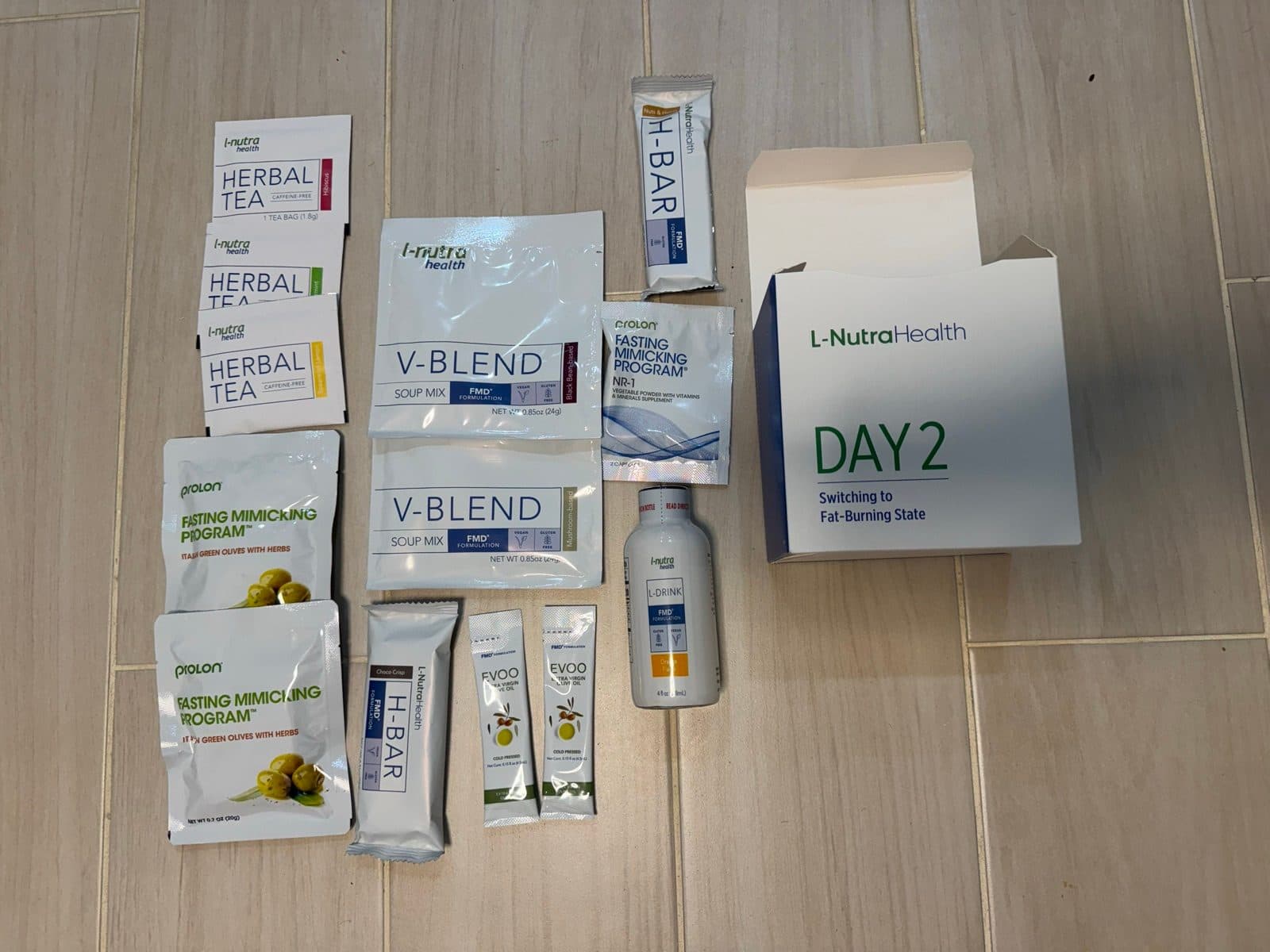
Each day comes in its own small carton. Mine for day 2 said "Switching to Fat-Burning State" on the front.
Inside were soup mixes, two nut bars, olives, herbal teas, olive oil, a drink, and a supplement packet. It's tidy. It looks like a science kit you can eat.
The catch is how little it adds up to. The whole day is about 750 to 1,100 calories (USC).
That's the "fasting mimicking" part. So why did I trust it?
The research that sold me
Prolon isn't a fad with no data. That's what pulled me in.
In one trial, 100 mostly healthy adults did the diet five days a month for three months. On average they lost 6 pounds and 1 to 2 inches off the waist (USC).
A 2024 study went further. After three rounds, people's "biological age" score dropped by about two and a half years (Lifespan.io).
One thing to know: Longo founded the company behind Prolon, and USC says so in its own release.
Action item: Before you buy any diet kit, find out who paid for the studies. It takes one search.
I read all that and thought it would be easy. I was already on a GLP-1.
Day 1: jittery and off track
A GLP-1 does not make fasting easy. I learned that on day 1.
I'm a slow responder. The shot takes the edge off my appetite, and that's all. So on day 1 I was hungry, on far less food than usual.
I got shaky and jittery. It felt like low blood sugar. I caved and ate carbs, and that threw me off track.
Prolon suggests easing in the day before. I skipped that and jumped straight in. Big mistake.
Action item: If you try a fasting kit, eat lighter the day before. Don't go from a normal Monday to a fasting Tuesday.
I went to bed sure that day 2 would go better.
Day 2: the number was fine, the day wasn't
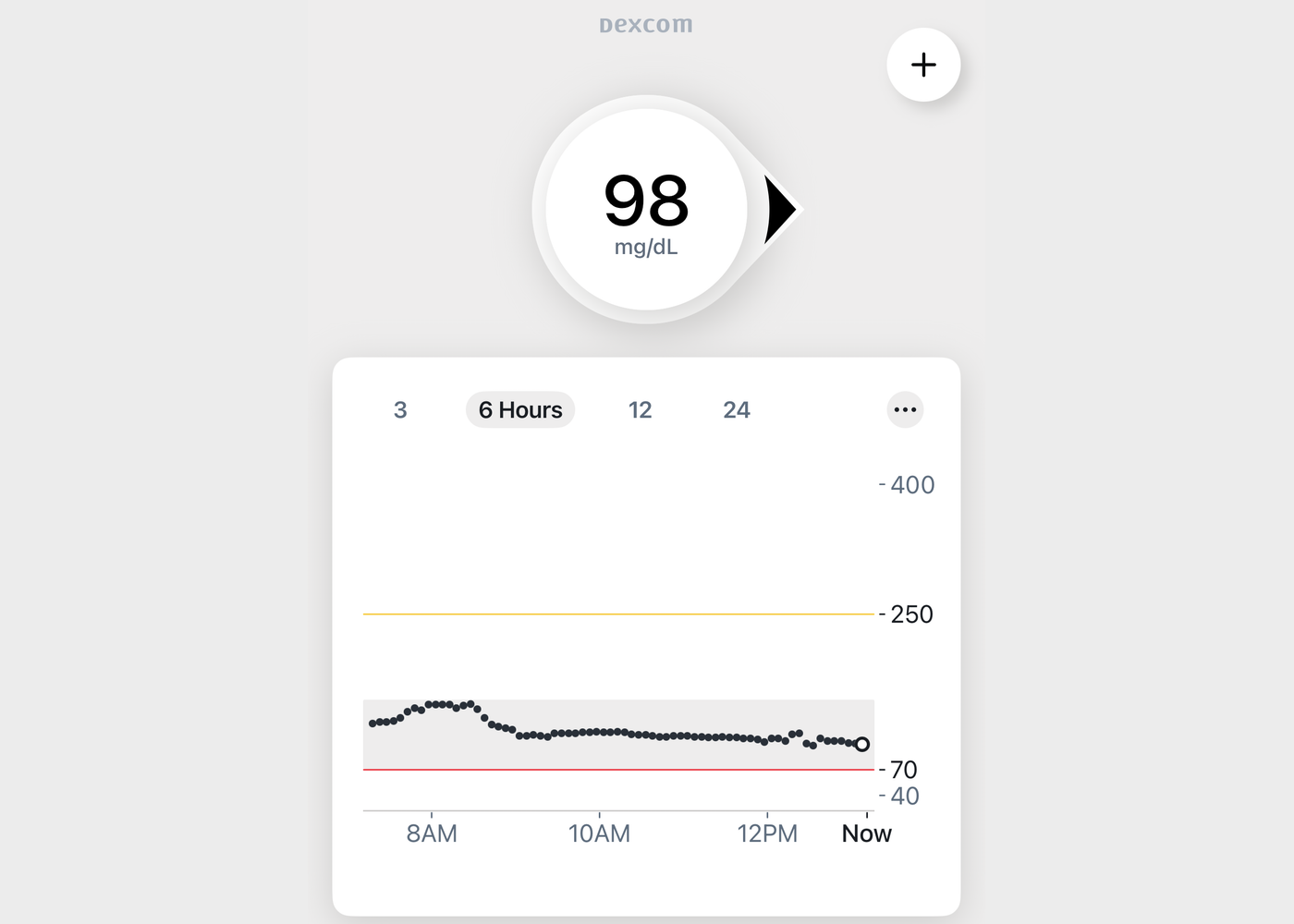
I wear a glucose monitor. On day 2, at lunchtime, it showed a flat, calm 98.
 View full-size illustration
So my blood sugar wasn't the problem that day. I still couldn't stick to it.
A rough ride is common. Healthline says "you may have fatigue, headaches, dizziness, or difficulty concentrating" on Prolon (Healthline).
Here's what I didn't expect. Feeling bad on a fast isn't always a blood sugar problem. Mine was a life problem. I was busy and stressed, with no room to feel foggy.
Day 2 went no better than day 1.
Day 3: I quit
Two failed days in, I gave up on the third.
Then came the part that stung. I'd started this to break a plateau. After a few days of fasting, caving, and eating to make up for it, I weighed more than when I began.
I'd failed miserably. Was it me, or was it the test?
Action item: If you slip on a fast, stop and eat a normal meal. Don't "make up" for it with a bigger slip.
A fast built for a quiet week
Look at what Prolon asks of you.
Its directions say to avoid hard exercise. If you feel dizzy or weak, don't drive (Prolon directions). Rest more.
Now look at a normal week. You drive. You work. Something goes wrong by Wednesday.
Here's my take. This diet works best when your life is quiet, and most lives aren't. In a trial, people sign up and plan around it. I did it on a busy week with stress on top.
I don't think the science is fake. I think the science happens in calmer rooms than mine.
One more warning, and it's the big one. Healthline says "people with diabetes, cancer, heart conditions, or a history of fainting should only try the ProLon diet under a doctor's supervision" (Healthline). Prolon's own directions say the same about diabetes and medications.
Action item: On a GLP-1 or any blood sugar drug? Ask your doctor before day 1, not after day 3.
So would I do it again?
What I'd do differently
Maybe. But not the way I did it.
Pick the quietest five days of the month.
Eat lighter the day before.
Tell my doctor first.
Clear the house of easy carbs.
Plan what to do when I slip, so one slip stays one slip.
Action item: Open your calendar. If you can't find five calm days in a row, this isn't your month.
The 5-Minute Version
Prolon is a five-day box of about 750 to 1,100 calories a day (USC).
The studies are real, and the founder's company sells the box.
A GLP-1 didn't make it easy for me. I'm a slow responder.
I failed day 1 and day 2, quit on day 3, and gained weight.
It's built for a rested, low-stress week.
If you take blood sugar medicine, talk to your doctor first.
Conclusion
I wanted a reset button. I got a lesson.
My body didn't fail Prolon. My week did. A fast that needs rest, calm, and no driving is a hard fit for a busy life.
I'm still stuck. But I'd rather tell you I failed than pretend a box fixed me.
If you try Prolon, pick a quiet week and ask your doctor first.
Have you ever quit a diet halfway? What broke it for you?
This is one person's experience, not medical advice. Talk to your doctor before you fast, above all if you have diabetes or take medication.
 MealCoach