
“Nutrition is not an afterthought—it’s a therapeutic partner.”
In this post you’ll learn how to eat on GLP-1s with six simple rules for Wegovy, Zepbound, Foundayo, or any GLP-1: how big to make meals, how fast to eat, what to put first on the plate, and when to stop. About 6 minutes.
Your Old Plate Doesn’t Fit Your New Stomach
Here’s how it goes for a lot of people. You start a GLP-1. The first week, you sit down to your usual Friday dinner: the big plate, the side of fries, the second helping out of habit.
Twenty minutes later you feel queasy, sweaty, and full in a way that isn’t pleasant. Some people decide the drug “doesn’t agree” with them.
Often the drug isn’t the whole story. The portion size, the speed and the “clean your plate” rule you learned before it are still running the meal. The medicine changed how your body handles food. Your habits didn’t get the memo.
“Eating too much can cause you to feel pretty nauseated.”
Action item: Tonight, serve dinner on a smaller plate than usual. Don’t change the food yet. Just change the plate.
Why GLP-1s Change How You Should Eat
GLP-1 drugs slow down how fast your stomach empties. Food stays put longer, so you feel full sooner and for longer, per Cleveland Clinic.
That’s the point of the drug. But it also means a normal-sized meal can feel like Thanksgiving.
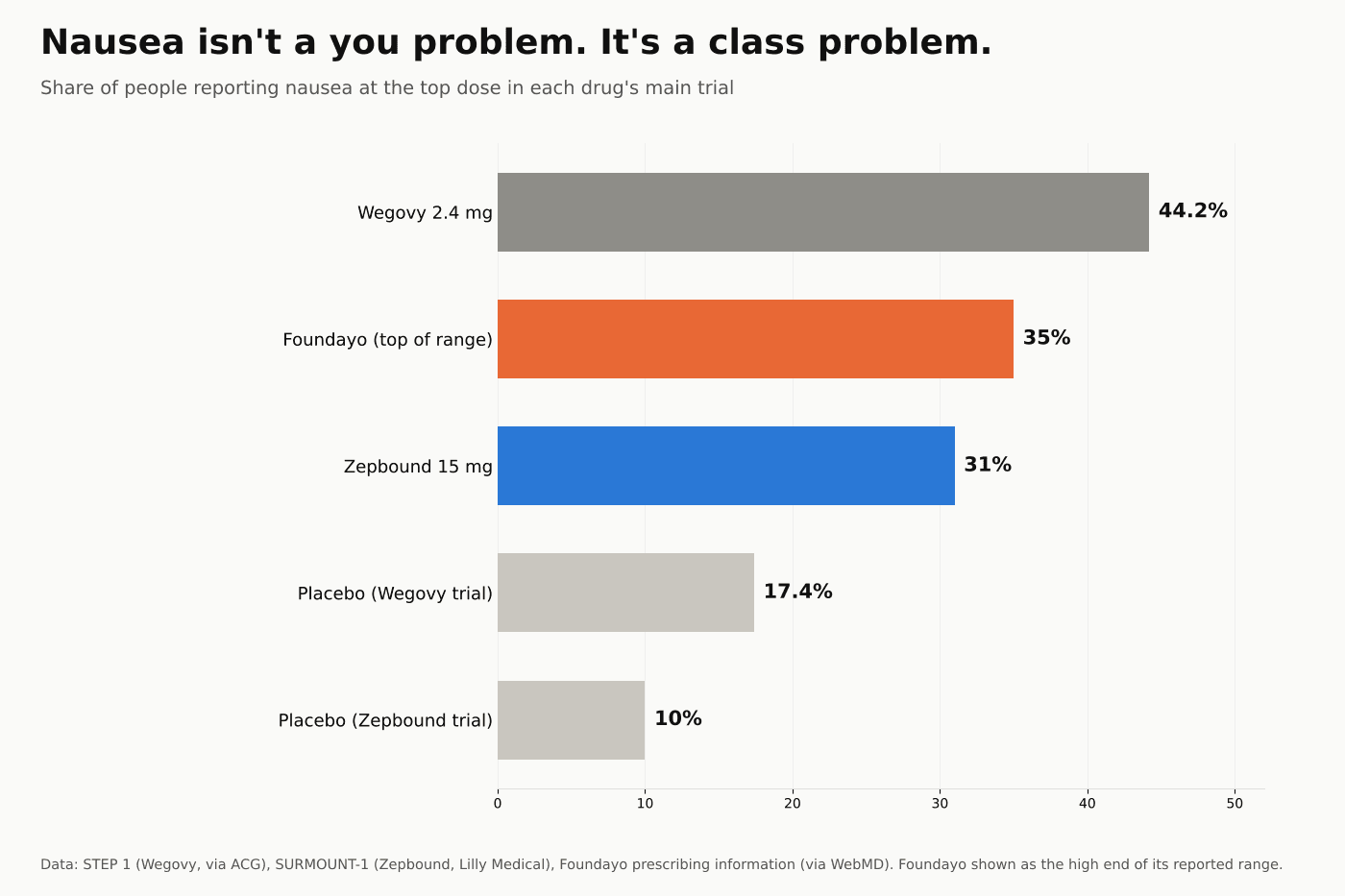
Nausea is common across the whole class. In their main trials, nausea hit 44.2% of people on Wegovy, 31% on Zepbound’s top dose, and up to 35% on Foundayo. Most of it eases over time.
Action item: Stop judging meals by how full you feel when you put the fork down. Check again 30 minutes later.
Rule 1: Eat Smaller Meals, More Often
The American College of Lifestyle Medicine suggests smaller meals about every 3 to 4 hours, and not skipping breakfast. A small, bland meal can actually calm nausea.
Think “four small plates,” not “three big ones.”
Action item: Plan tomorrow as four small meals instead of three big ones. Write the times down.
Rule 2: Protein First, Even a Few Bites
When you can only eat a little, what you eat matters more. Four medical societies, in a joint 2025 advisory, named adequate protein plus strength training as a priority, to help protect muscle while you lose weight.
The ACLM handout puts it simply: prioritize protein, even if it’s just a few bites.
Action item: Start each meal with the protein on your plate: eggs, yogurt, beans, tofu, fish, or chicken. Vegetables and carbs come second.
Rule 3: Slow Down for the First Five Minutes
Your brain can take up to 30 minutes to register fullness, per Cleveland Clinic. On a GLP-1, eating fast is a great way to overshoot before the signal arrives.
The first five minutes of a meal are where most of the speed happens. That’s when you’re hungriest and least aware.
Try a fork-down rule: put your fork down between bites until five minutes have passed.
If you want a timer for this, we made a free browser version of MealCam that notices your bites and nudges you to pause. No signup, and no video leaves your device.
Action item: At your next meal, put your fork down between bites for the first five minutes.
Rule 4: Stop at “Comfortably Satisfied,” Not “Full”
On a GLP-1, “full” arrives late and lands hard. The ACLM handout’s advice is to eat slowly and stop when comfortably full.
A simple test: ask yourself mid-meal, “Could I go for a short walk right now?” If the answer is a happy yes, you’re in a good spot. If you’d rather lie down, you went too far.
Why fullness lands so late and so hard is the subject of Why You Feel Full Faster on Zepbound.
Action item: Leave two bites on your plate at every meal this week. It retrains the “clean your plate” reflex.
Rule 5: Go Easy on Greasy, Fried, and Very Rich Food
High-fat meals sit in the stomach longer, and on a GLP-1 that can mean more nausea and reflux. Cleveland Clinic suggests limiting foods like pizza and fried chicken, especially early on and around dose increases.
Also stay upright for at least 30 minutes after eating and skip late-night meals, which can help with reflux, per WebMD.
Action item: On the day of a dose increase, keep meals simple: lean protein, cooked vegetables, rice or toast.
Rule 6: Drink Steadily and Add Fiber Slowly
Constipation is the other common complaint. The fix is boring and it works: sip fluids through the day, add fiber gradually from fruit, vegetables, beans, and whole grains, and walk daily.
Don’t add a mountain of fiber overnight. That trades one stomach problem for another.
Action item: Keep a water bottle where you can see it, and add one extra serving of fruit or vegetables a day this week.
A Worked Example: One Easy Day
Here’s what these rules look like in a real day. It’s an example, not a prescription.
- 7:30 am: Greek yogurt with berries. Eaten slowly, sitting down.
- 11:30 am: Half a sandwich with chicken or hummus, plus a small salad. Fork down between bites for five minutes.
- 3:30 pm: A boiled egg or a handful of nuts, with water.
- 6:30 pm: Small plate: fish or tofu first, then vegetables, then a little rice. Stop at comfortably satisfied. Short walk after.
Notice what’s missing: no giant meal, no rushing, no lying down after dinner. That’s most of the battle.
If you’re on Foundayo specifically, I covered its side effects and red flags in Foundayo Side Effects.
Action item: Copy this day into your notes app, swap in foods you like, and try it once this week.
What This Means for You
✅ You know why your old portions now backfire
✅ You eat four small meals instead of three big ones
✅ You put protein first
✅ You slow down in the first five minutes
✅ You stop at comfortably satisfied, not stuffed
The 5-Minute Version (Screenshot This)
- Smaller meals, more often: about every 3 to 4 hours.
- Protein first: even a few bites.
- Slow down: fork down between bites for the first five minutes.
- Stop early: comfortably satisfied, not full.
- Go easy on greasy food, sip fluids, add fiber slowly.
Conclusion
How to eat on GLP-1s comes down to one shift: smaller, slower, and protein-first. The drug turns up your fullness signals. Your job is to give them time to arrive.
Your one action today: at your next meal, put your fork down between bites for the first five minutes.
So tell me: what’s the one eating habit that’s been hardest to change since starting a GLP-1?
Sources
- American College of Lifestyle Medicine: Understanding Side Effects of GLP-1 Medicines
- The Obesity Society: joint advisory on nutritional priorities for GLP-1 therapy (2025)
- Cleveland Clinic: how to manage GLP-1 side effects
- American College of Gastroenterology: STEP 1 (Wegovy) side effects
- Lilly Medical: Zepbound stomach side effects in SURMOUNT-1
- WebMD: Foundayo side effects
 MealCoach